Modern life often gives the impression that progress must be visible to count. A full calendar, a long list of completed tasks and a constant stream of activity can look like signs of ambition. People may feel uneasy when a day contains open space, as though time that is not filled with work has been wasted. Yet activity and progress are not always the same thing. A person can remain busy while moving in circles, responding to every demand without deciding which direction matters. Stillness offers a different possibility: a deliberate pause in which attention can settle and the next step can become clearer.
Stillness is not simply the absence of noise or responsibility. It is a state in which a person is not immediately pulled into the next demand. It may happen during a quiet walk, a few minutes spent looking out of a window, an unhurried morning or a short period without a screen. The surroundings do not need to be perfect. A crowded schedule may not allow an entire day of rest, but even a small interval can create distance from the constant habit of reacting. That distance helps a person notice what is happening internally instead of allowing every thought to become an instruction.
One of the first benefits of stillness is the ability to recognise mental clutter. When attention is divided among messages, deadlines, comparisons and unfinished tasks, it becomes difficult to distinguish important concerns from temporary noise. A quiet pause allows those concerns to appear more clearly. Some problems may need action, while others may be worries repeated without new information. Some goals may still feel meaningful, while others may have been carried forward only because they once seemed impressive. Reflection does not solve everything, but it helps identify what deserves energy.
Stillness can improve decisions because it creates room between an impulse and a response. A difficult message does not always require an immediate reply. A disappointing result does not have to determine the next choice. A new opportunity may deserve careful thought rather than an automatic yes. When a person pauses, the first emotional reaction can settle enough for practical questions to emerge. What is known? What is being assumed? What outcome matters most? What would be the cost of acting now, and what might become clearer with time? These questions are easier to consider when the mind is not rushing to close every uncertainty.
Doing less can also reveal the difference between meaningful effort and unnecessary pressure. A person may spend hours maintaining tasks that create the appearance of productivity but contribute little to the larger goal. The willingness to pause makes it possible to review routines and remove what no longer serves a purpose. This does not mean avoiding hard work. In fact, focused effort often becomes more effective when it is supported by periods of recovery. A person who understands when to concentrate and when to step back is more likely to sustain effort over time than someone who treats exhaustion as proof of commitment.
Rest is sometimes misunderstood as a reward that must be earned after every responsibility has been completed. Since responsibilities rarely end completely, this belief can make rest feel permanently out of reach. A healthier approach recognises recovery as part of the process rather than an interruption to it. Sleep, unhurried meals, movement, time outdoors and moments without digital stimulation help restore attention. They also support the patience required to learn difficult skills and navigate relationships. Rest does not guarantee success, but the absence of rest can make ordinary challenges feel much harder than they need to be.
Stillness can change the way a person relates to other people as well. Someone who is constantly distracted may hear words without fully listening. A pause creates the possibility of giving another person undivided attention. It can make conversations less transactional and reduce the urge to prepare a response before the other person has finished speaking. In relationships, this kind of presence can be more valuable than offering immediate advice. Sometimes people need to be heard before they are ready to consider solutions. The ability to remain present is strengthened when the mind is not trained to rush through every moment.
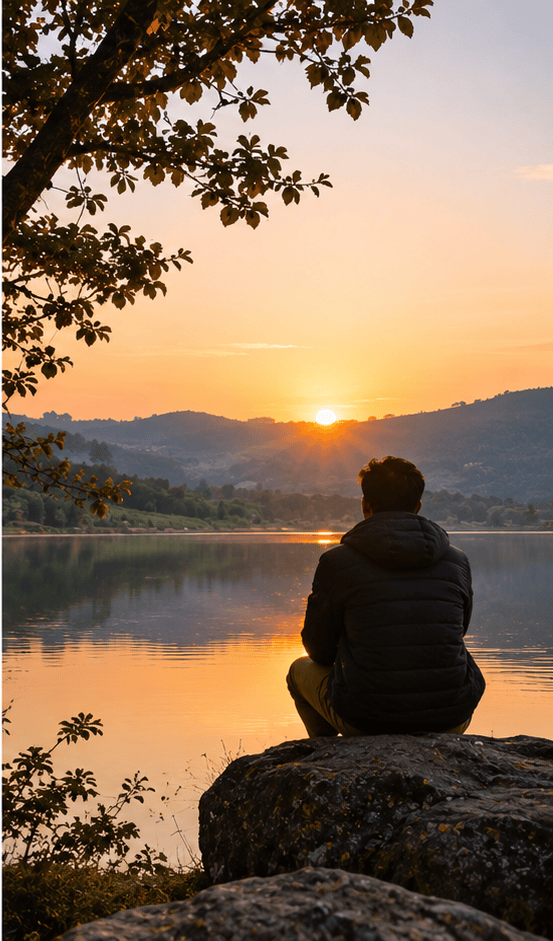
Nature often makes stillness easier to experience. A quiet lake, a stretch of open sky or the steady movement of trees in the wind can draw attention away from internal noise. The landscape does not ask for an answer or measure the value of a moment by its productivity. It simply offers something to observe. A person sitting beside water may notice thoughts arriving and passing without needing to follow each one. The value is not in escaping ordinary life but in returning to it with a little more perspective. Even a nearby park or balcony can offer a similar pause when a distant retreat is not possible.
Building stillness into a routine does not require a complicated practice. A person might begin the day with a few minutes before opening messages, take a short walk without headphones or leave a small gap between work and the next commitment. The most useful approach is one that can be repeated without turning into another demanding target. If the pause becomes a performance with strict rules, it may recreate the pressure it was meant to reduce. Its purpose is to make attention available, not to create another standard against which a person must judge themselves.
Growth is often imagined as constant movement towards something new. Yet meaningful development also depends on knowing when to stop, review and understand what has already happened. Stillness allows experience to settle into learning. It helps a person recognise which commitments deserve continued effort, which habits need to change and which ambitions may have been chosen for the wrong reasons. Doing less is not automatically wise, just as doing more is not automatically productive. The strength lies in choosing deliberately. When a person creates space for quiet attention, action can become more purposeful, relationships more present and progress more sustainable. Sometimes growth begins not with another step forward, but with the decision to pause long enough to see where that step should lead.

