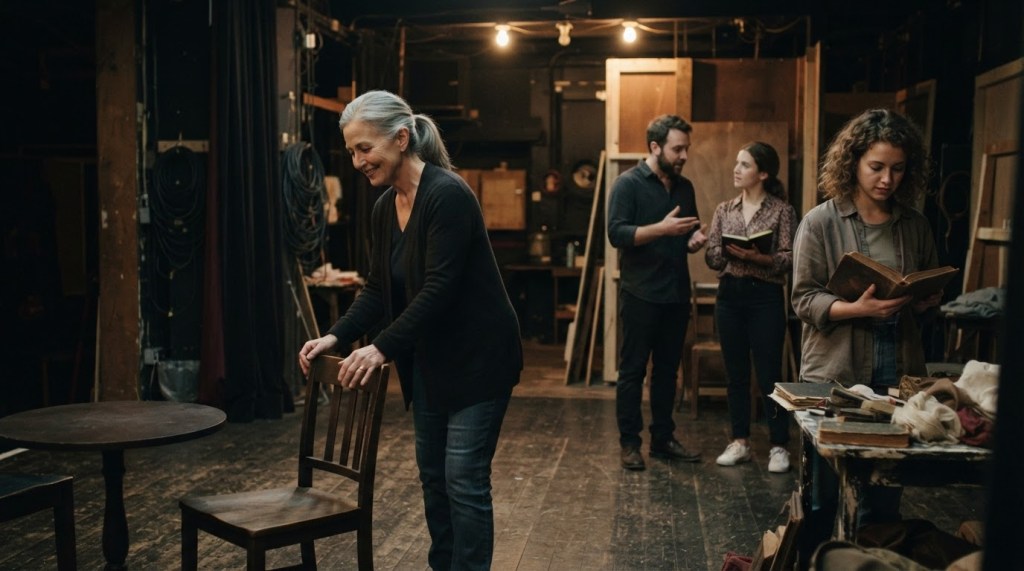
Before the seats fill and the first light settles on the stage, a community theatre is already alive with activity. A volunteer checks the entrance, someone carries a chair into position, a performer quietly repeats a difficult line and another person searches for a missing prop. The room may be a school hall, a modest civic auditorium or a converted neighbourhood space, but the work has the same character. A performance that lasts for an evening has usually been built through weeks of small, shared efforts. For anyone who arrives only when the curtain rises, much of the experience remains invisible.
Community theatre is often mistaken for a smaller version of professional theatre, as though its main purpose were to imitate a larger production with fewer resources. Its real strength lies elsewhere. It brings people together around a story and gives them a reason to contribute in different ways. Some participants have acted for years; others are trying the stage for the first time. A retired teacher may help with costumes, a student may manage sound, a local craftsperson may build a simple set, and a neighbour who dislikes being watched may still volunteer at the door. The production becomes a shared project rather than the achievement of a single performer.
Rehearsals reveal how much patience that shared project requires. Lines that sound natural in conversation can feel awkward under stage lights. A movement that seems simple in an empty room may become confusing when several actors, props and entrances are involved. The director has to explain an idea without making every choice on behalf of the performers. Actors learn to listen for cues, adjust their timing and leave space for another person’s moment. When a scene fails, the group tries it again. The process can be tiring, but it teaches a kind of attention that is difficult to practise alone: each person must understand both an individual role and the rhythm of the whole.
The stage itself is only one part of the work. A production needs people who organise rehearsal times, repair costumes, prepare refreshments, arrange seating, manage ticketing and make sure that the room is ready for an audience. These tasks rarely receive applause, yet they shape whether the evening feels welcoming and whether performers can concentrate. Community theatre makes this contribution visible because the people doing the work are often neighbours and friends. Their skills may have been learned outside formal arts training, through family craft, school events, workplace projects or simple willingness to help. A production gives those abilities a common purpose.
There is also something distinctive about the relationship between a local audience and the people on stage. Viewers may recognise a familiar street, a local expression or a type of family conversation in the story. The performers may know some of the people sitting in the front row. That familiarity can make the room feel exposed at first, but it can also create a warmth that a distant production cannot easily reproduce. Laughter arrives in places that have meaning for the community, and silence can become especially attentive when a scene touches an experience people have shared. The performance becomes an exchange between the stage and the room.
Not every community production is polished, and that is part of its honesty. A prop may look handmade, a transition may take a few seconds longer than planned and a performer may pause before finding the next line. These imperfections do not automatically weaken the experience. They remind the audience that the people on stage are taking a real creative risk in front of those they know. What matters is whether the story is offered with care and whether the group has worked together to make the best use of what is available. In that setting, sincerity can matter as much as technical perfection.
Community theatre can also create room for people who rarely see themselves represented in public cultural life. A teenager who is usually quiet may discover confidence through a small role. An older resident may find that years of storytelling can become a valuable contribution to a script. People from different occupations and age groups can work side by side without needing the same background. The process does not erase differences, but it gives participants a reason to listen across them. Even those who never step onto the stage may feel included through set building, ushering, music, lighting or simply showing up to support the group.
After the performance, the room changes again. The audience leaves in clusters, performers begin removing costumes, chairs are stacked and the stage returns to an ordinary floor. Someone may ask how a difficult scene was managed; another person may thank the volunteer who helped them find a seat. The conversations continue beyond the official ending, often in the corridor or outside the building. Those moments are easy to overlook because they are not part of the script, but they reveal what the theatre has made possible. People have shared an evening, seen familiar faces in unfamiliar roles and found a reason to meet again.
A community theatre is not important only because it produces a play. It creates a temporary world in which many kinds of contribution become visible and where a group can make something no individual could have made alone. Its value can be measured in skills learned, friendships strengthened, stories heard and confidence gained, as well as in applause. For a visitor, the most memorable part of the night may be the final scene. For the people who helped bring it to life, the memory often includes the first rehearsal, the repaired costume, the missed cue and the moment when the whole room finally worked together. The curtain falls, but the sense of belonging can remain long after the lights are switched off.

