A place of worship can be one of the most memorable stops on a journey. Its architecture may be remarkable, its setting may be peaceful and its history may stretch across generations. Yet the most important part of the visit is not always what can be seen from the entrance. For the people who gather there, the site may be a place of prayer, community, mourning, celebration or daily routine. A traveller enters a space that already has meaning long before arrival. The experience becomes richer when the visitor recognises this and approaches with curiosity that does not demand attention or special treatment.
The first step towards a respectful visit happens before reaching the gate. A little research can help a traveller understand whether the site is open to visitors, whether certain areas are reserved for worshippers and what clothing or footwear is appropriate. Customs vary widely between traditions and even between places that belong to the same tradition. Some sites ask visitors to cover their shoulders or legs, remove shoes, wash their hands or follow a particular route. Others may restrict entry during ceremonies or close parts of the building at certain times. Checking current guidance prevents avoidable embarrassment and shows that the visitor values the place enough to prepare.
Clothing is often a visible sign of respect, but the principle is broader than following a dress code. Visitors can choose practical, modest clothing that allows them to move comfortably without drawing unnecessary attention. If shoes must be removed, they should be placed where instructed rather than left in a doorway or walkway. If a head covering is requested, the visitor should follow the site’s guidance. These actions may seem small, but they help preserve the shared order of a space. They also remind travellers that being welcome as a visitor does not mean every personal preference should take priority over local practice.
Photography requires particular care because a camera can change the atmosphere of a room. Some places permit photographs of architecture but prohibit images of worship, ceremonies or people. Others do not allow photography at all. A sign or instruction from staff should be treated as final, even when other visitors appear to be taking pictures. The absence of a sign is not automatic permission to photograph someone who is praying. A traveller should ask before taking portraits and accept a refusal without argument. Flash, loud camera sounds and repeated attempts to find a dramatic angle can disturb people who came for a very different purpose.
A respectful visitor also understands the difference between observing a ceremony and participating in it. Rituals may have meanings that are not obvious to someone encountering them for the first time. A traveller can watch quietly from an area open to visitors without copying gestures simply because they look interesting. If a local guide explains the meaning of an offering, bell, lamp or procession, the visitor can listen and ask questions at an appropriate moment. It is better to admit not knowing than to invent an explanation. Curiosity becomes valuable when it allows the people who belong to a tradition to describe it in their own terms.
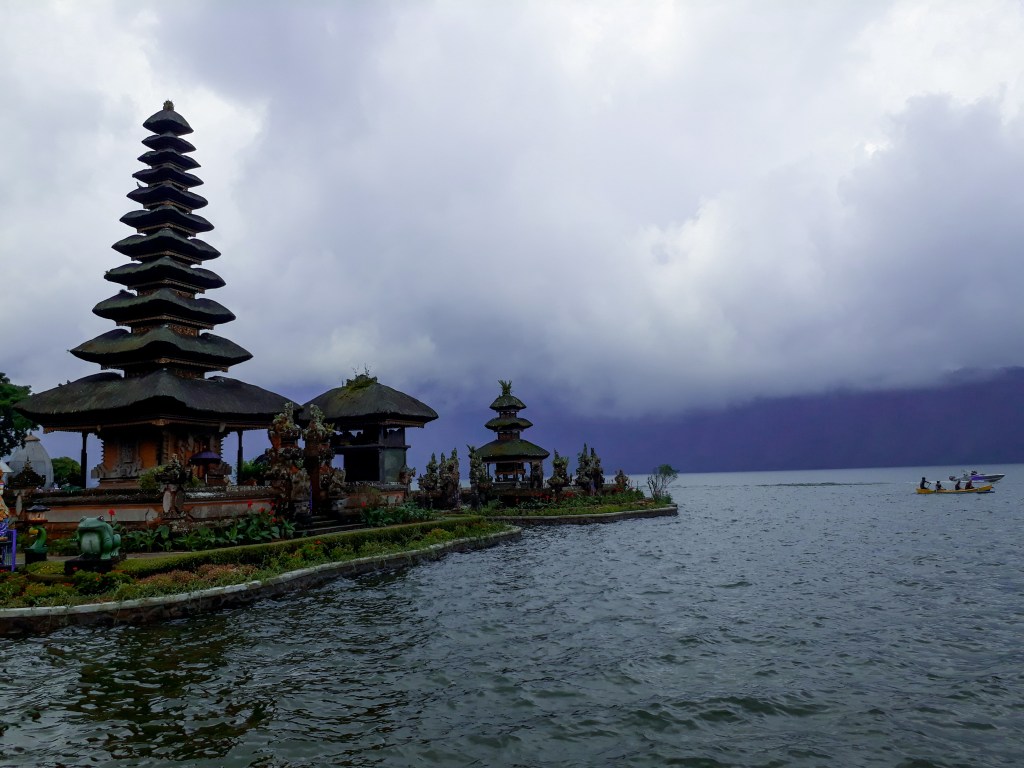
The lakeside setting of Ulun Danu Beratan Temple in Bali offers an example of how a sacred site can be closely connected to its surrounding landscape. The temple stands beside Lake Bratan and is associated with water, prosperity and the wider cultural importance of irrigation in the region. Its towers and reflections make it visually striking, but the setting is more than a scenic composition. It belongs to a living cultural and religious system. A visitor who understands even a little of that relationship sees the site differently from someone who treats it only as a beautiful background for a photograph.
Respect also means being aware of the people who maintain a site. Cleaners, caretakers, guides, volunteers and religious workers help keep a place functioning, often without becoming part of the visitor’s story. Their instructions should be followed, and questions should be asked politely without interrupting work. If donations are invited, a visitor can use official channels and avoid pressuring individuals for explanations about money. Buying a permitted guidebook or supporting a recognised local conservation or community effort may be a more useful way to contribute than handing cash to someone whose role is unclear.
Not every sacred place looks grand or attracts international attention. A small neighbourhood shrine, a modest church, a mosque on a busy street or a community prayer hall may be central to local life even if it does not appear in travel guides. These places deserve the same care as famous landmarks. Travellers should avoid entering restricted areas, blocking paths, touching objects without permission or treating worshippers as part of a staged cultural scene. If a service is taking place, the visitor may need to wait outside or return at another time. The purpose of travel is not to interrupt the lives that make a place meaningful.
A visit can also challenge assumptions. Travellers may arrive with ideas shaped by films, social media or brief descriptions and discover that the actual experience is more complex. A building may serve several communities, a ritual may have regional variations, or a quiet area may be important for reasons that are not immediately visible. Listening to local explanations helps replace generalisations with a more grounded understanding. It is equally important to recognise when a question is too personal or when a guide does not know the answer. Respectful curiosity does not require access to every detail.
The most lasting part of a visit to a sacred place may be the feeling of having entered a space without needing to own the experience. A traveller can appreciate craftsmanship, learn about history and enjoy the stillness while remembering that the site belongs first to the people who worship there. The visitor’s role is temporary, and that can be a useful lesson. Travel becomes more thoughtful when it makes room for lives and beliefs beyond one’s own. A respectful journey leaves the place undisturbed, the people comfortable and the traveller a little more aware of how culture, faith and community shape the world.

