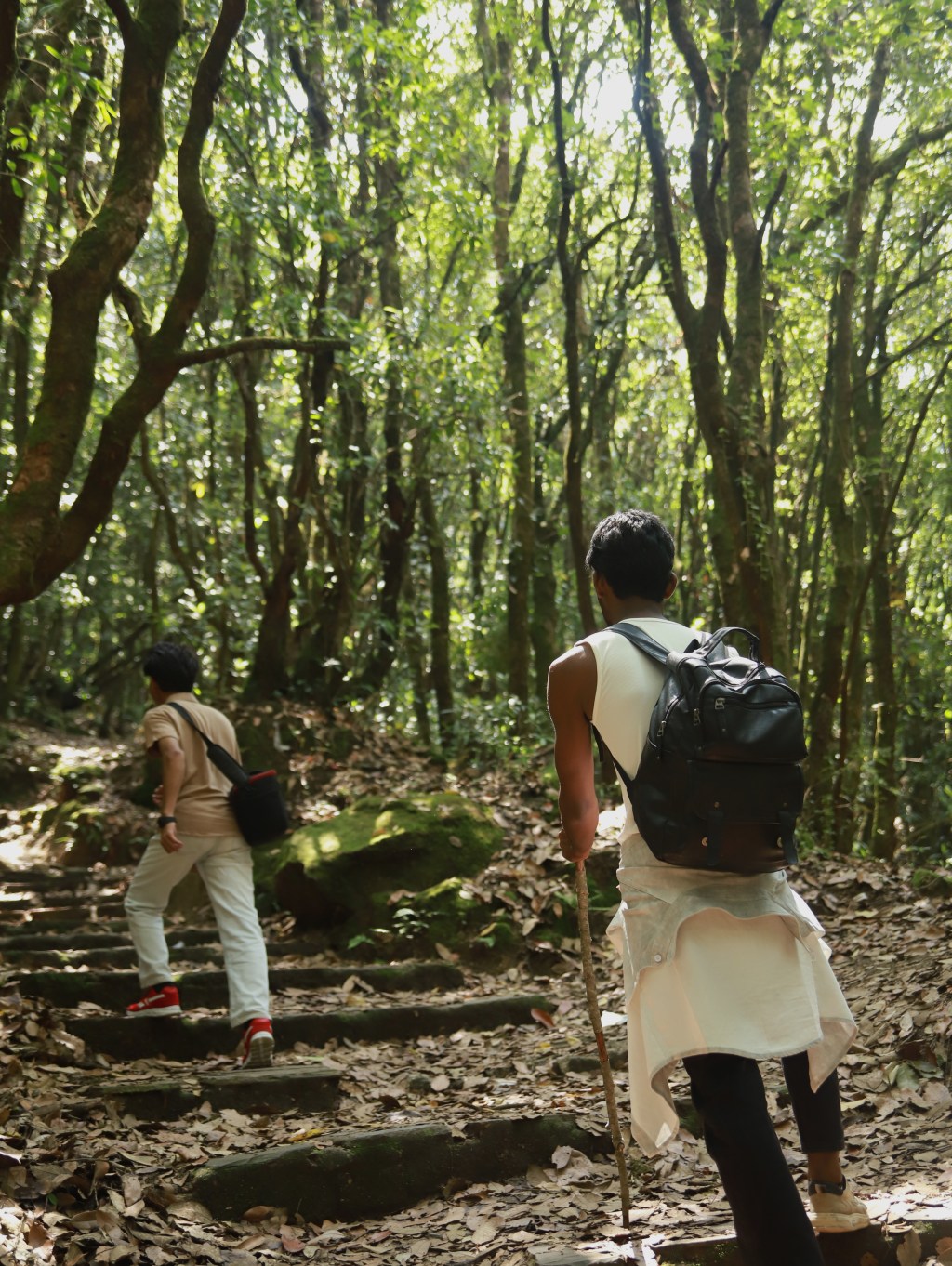
A mountain trail can feel wonderfully personal, even when several people are walking along it. The path may narrow between trees, open onto a ridge or cross a stream before climbing towards a viewpoint. Each walker carries a private reason for being there: some are testing their endurance, some are travelling with friends, and others simply want a few hours away from familiar routines. Yet a trail is shared space. The quality of the experience depends not only on the landscape or a person’s preparation but also on the small decisions made around other walkers.
The simplest courtesy often begins with awareness. On a narrow section, a faster group may need to pass, while someone climbing slowly may need a little room to keep a steady rhythm. A brief greeting and a moment to judge the safest place to step aside can prevent awkwardness. People descending should remain attentive to those climbing, especially where loose stones or steep edges make movement difficult. There is no need for elaborate rules in every situation. A little patience and an understanding that everyone has a different pace can make the trail feel more generous.
Noise is another part of sharing the outdoors. Conversation is natural, and laughter can be part of a memorable walk, but loud music played through speakers can travel much farther than expected. It can disturb wildlife, interrupt the quiet that other visitors came to enjoy and make it harder to hear useful sounds such as approaching weather or instructions from a guide. Keeping music on headphones at a considerate volume, or choosing to leave it off, allows the natural environment to remain part of the experience. Silence does not belong to one person, but it can be protected by everyone’s choices.
Offering help requires a similar balance between kindness and respect. A walker who notices another person struggling with a pack, searching for a route marker or recovering after a difficult climb can offer assistance without assuming that help is wanted. A simple question is often enough. If the person declines, that answer should be accepted. If help is needed, clear information and calm support are more useful than dramatic gestures. The aim is to make the situation easier, not to turn another person’s difficulty into a performance or a story for an audience.
Trail information can be valuable when it is shared accurately. Someone returning from a stream crossing may know that the water is higher than expected, or a group coming down from a ridge may have noticed a change in the weather. Passing on practical observations can help others make better decisions. At the same time, walkers should distinguish what they have personally seen from what they have only heard. Conditions change, and a confident but outdated claim can create more risk than silence. Local guides and official advice remain important sources, especially on remote or exposed routes.
Photography also benefits from courtesy. A person resting beside a viewpoint may not want to appear in a stranger’s picture, and a local resident using a path may not wish to become part of a travel post. Asking before taking identifiable photographs is a small but meaningful sign of respect. The same care applies to photographing children, workers and people in places of worship. Landscapes can often be captured without intruding on anyone’s privacy. A memorable image is not worth making another person uncomfortable.
The environment itself needs consideration. Staying on established paths helps reduce erosion and protects fragile plants. Carrying wrappers, bottles and food waste back out prevents litter from accumulating in places where collection services may be limited. Soap, detergents and food scraps should not be left in streams, and wildlife should never be fed for the sake of a closer photograph. Even a small group can leave a visible impact if each person assumes that one extra step off the trail or one discarded item will not matter. Responsible behaviour is built from ordinary choices repeated consistently.
Groups can make a difference by agreeing on a shared rhythm before setting out. A walk becomes stressful when the fastest members disappear ahead while slower members feel pressured to catch up. A simple plan for regrouping at safe points, checking that everyone has enough water and adjusting the pace to the least experienced member can prevent avoidable problems. This does not mean every person must walk at exactly the same speed. It means the group takes responsibility for staying connected and making decisions together rather than leaving someone to manage uncertainty alone.
Guides, porters and trail workers deserve the same courtesy as other walkers, and often more because their work makes the journey possible. They should be spoken to respectfully, paid according to agreed terms and given appropriate rest and equipment. Their knowledge should be treated as expertise rather than as a service that can be demanded without consideration. A visitor who learns from a guide’s local understanding gains more than directions. They gain a clearer sense of the landscape, its risks and the people whose lives are connected to it.
At the end of a trek, people often remember the summit, the weather or the view that appeared after a difficult climb. They may also remember a stranger who stepped aside on a narrow path, shared a useful warning or waited while someone caught their breath. These gestures rarely attract attention, yet they shape the atmosphere of the journey. A shared trail works best when every walker understands that the experience belongs to many people at once. Courtesy does not reduce adventure; it makes adventure safer, kinder and more enjoyable for everyone.

