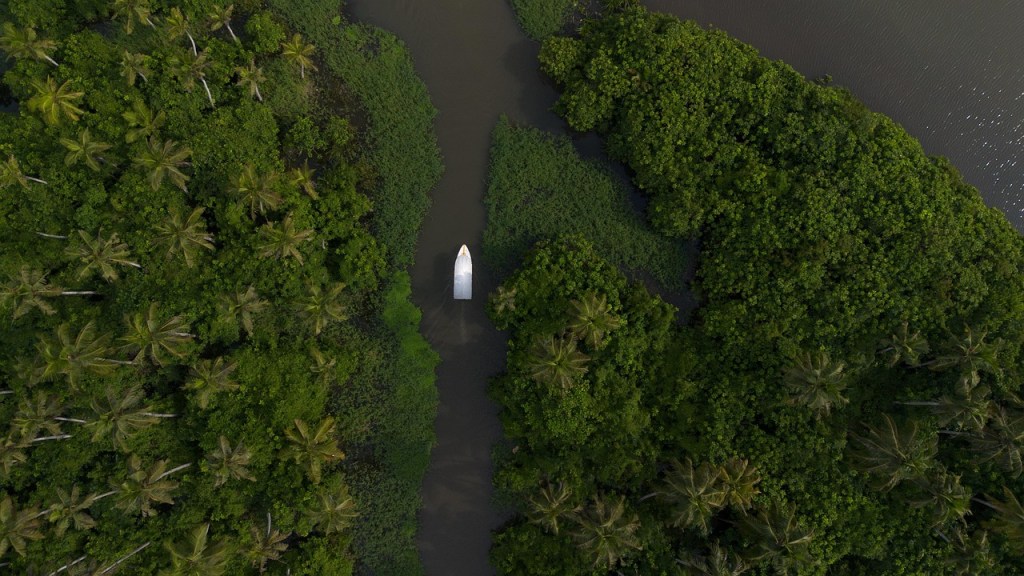
Kerala’s backwaters invite a traveller to experience distance differently. On a road, a destination is usually measured by kilometres and the time needed to reach it. On a quiet waterway, progress can be measured by the changing reflections on the surface, the bend of a canal or the sound of a bird disappearing into the trees. A boat moves at a pace that allows the landscape to reveal itself gradually. Coconut palms, low bridges, homes close to the water and narrow passages between green banks become part of one continuous scene. The journey feels less like travelling through a place and more like spending time within it.
The backwaters are not a single lake or river but a connected landscape of canals, lagoons, lakes and waterways that runs alongside Kerala’s coast. Their character changes from one stretch to another. Some sections open into broad expanses where the sky occupies much of the view, while others narrow beneath overhanging branches and dense vegetation. The water may look still, but it carries the movement of boats, tides, rainfall and daily activity. A traveller who pays attention begins to notice that this landscape is both natural and lived in, shaped by water as well as by generations of people who have learned to live beside it.
A boat ride can be most memorable when it is not treated as a race to cover a route. In the early hours, light moves softly across the water and the banks appear before the day becomes busy. A canoe may pass close to a garden wall, a ferry may carry residents between nearby settlements, and a larger houseboat may move slowly through an open stretch. Each vessel serves a different purpose and creates a different view of the same environment. Choosing a locally operated boat and asking about the route can help a visitor understand the waterway rather than simply consume it as scenery.
Everyday life gives the backwaters their strongest sense of place. People may be seen tending small gardens, preparing fishing equipment, transporting goods or travelling to work along routes that happen to be waterways. A house beside a canal is not a decorative feature arranged for visitors; it is a home with routines, responsibilities and private moments. The traveller may notice laundry drying in the sun or a child waiting near a landing, but those scenes belong to the residents first. Observing them respectfully means keeping a comfortable distance, avoiding intrusive photography and remembering that ordinary life does not become public property simply because it looks picturesque.
The waterways also connect visitors with local livelihoods. Fishing, small-scale trade, farming, boat operation and hospitality all form part of the wider economy around the backwaters. A meal prepared with local ingredients or a conversation with a boat operator can provide context that a scenic viewpoint cannot. The person guiding a boat may know where the channel becomes shallow, how weather affects a route or which stretch is especially active at a particular time of day. Such knowledge is practical and accumulated through experience. Listening to it gives the traveller a more grounded understanding of the landscape and the people who depend on it.
Nature is never separate from this human activity. The banks support plants, birds and other wildlife, while mangrove areas and wetlands can play important roles in the health of coastal environments. Water quality, waste management and changes in land use affect the places that residents and visitors value. A responsible journey therefore involves more than choosing a beautiful route. It includes avoiding litter, refusing to throw food or plastic into the water, keeping noise low around wildlife and selecting operators who follow local environmental guidance. Small choices may seem insignificant during one trip, but repeated habits influence the condition of a shared ecosystem.
The backwaters are often associated with houseboats, and those journeys can be enjoyable when expectations are realistic. A larger vessel offers a comfortable way to spend time on the water, while a smaller boat may reach narrower channels and bring the traveller closer to village edges. Neither experience is automatically better. The right choice depends on the route, the time available, the group and the kind of encounter being sought. A thoughtful visitor asks what is included, how waste is handled and whether the route passes through sensitive or residential areas. These questions support a better experience for both guests and the people who live there.
Slow travel does not mean leaving every detail to chance. Weather, water levels, local conditions and transport arrangements can influence a journey, so a little preparation remains useful. Travellers benefit from checking current advice, allowing enough time for transfers and carrying essentials such as sun protection and drinking water. They should also leave space in the schedule for an unplanned pause. A small tea stop, a quiet stretch beneath the trees or a brief conversation at a landing may become more memorable than another item on an itinerary. Flexibility allows the place to set part of the rhythm instead of forcing every moment into a timetable.
Food can make the connection with the region more tangible. A meal enjoyed near the water may introduce flavours, ingredients and cooking traditions that reflect the surrounding landscape. Rather than looking only for a familiar menu, a curious traveller can ask what is seasonal or locally prepared, while remaining considerate of dietary needs and personal preferences. Supporting small restaurants and family-run stays can help local businesses benefit from tourism. The important point is not to turn every meal into an exercise in authenticity, but to approach it with openness and respect for the people who prepare and serve it.
By the end of a backwater journey, the strongest memory may be a detail that seemed unimportant at first: a narrow canal opening into a wide lake, the reflection of a palm moving across the water or the steady work of someone guiding a boat home. The backwaters reward attention because they are not simply a backdrop for photographs. They are a living network of nature, work and community. A traveller who moves slowly, asks thoughtful questions and leaves a light footprint returns with more than images of green shores. The journey offers a reminder that exploration can begin when the pace becomes quiet enough to notice how a place actually lives.

