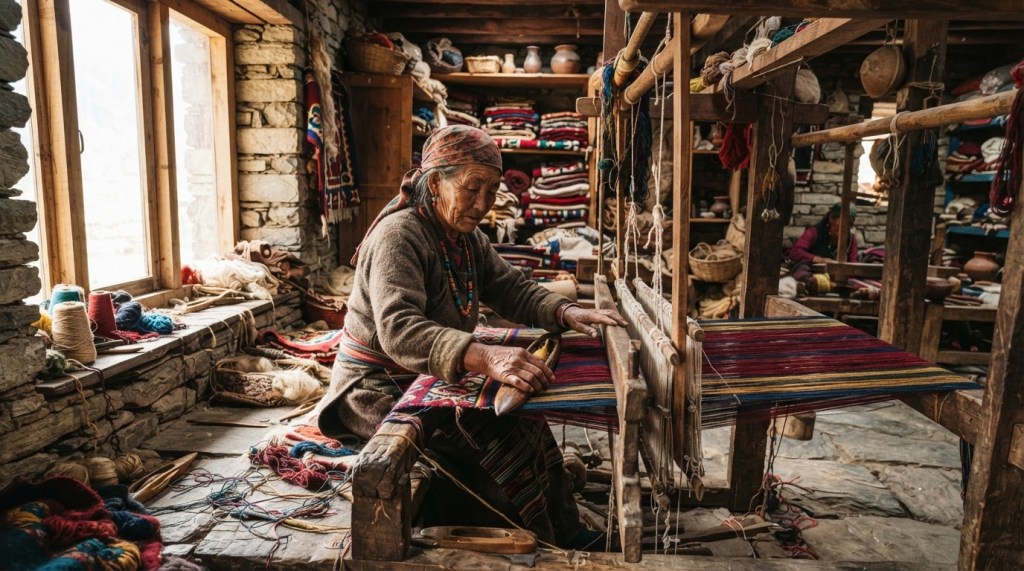
A handmade object can seem simple when it is first seen on a market shelf. A woven scarf, a carved wooden bowl or a small piece of pottery may attract attention because of its colour, texture or shape. Yet the object carries a story that is not always visible. It reflects the materials available in a region, the skills learned through practice and the choices made by the person who shaped it. For a traveller, meeting the artisan behind the work can transform a brief shopping stop into a much richer encounter with the place and the people who give it character.
A workshop often tells that story before a conversation begins. The room may contain tools polished by years of use, bundles of fibre sorted by colour, pieces waiting to dry or a loom that moves with a rhythm known only to its maker. The sounds are different from those of a tourist market. There may be the soft strike of a hammer, the scrape of a carving tool or the repeated movement of thread through a wooden frame. These details reveal the time and attention that sit behind the finished object. They also remind visitors that craft is work, not simply decoration.
An artisan’s skill is usually built through repetition and observation. A technique may have been learned from a parent, grandparent, teacher or neighbour, then refined through years of making. Small movements that appear effortless to an experienced craftsperson can require considerable concentration from a beginner. The artisan knows how a material behaves in heat, how much pressure a tool can take and when a piece is ready for the next stage. Such knowledge is often practical rather than written down. It lives in the hands, judgement and memory of the person doing the work.
Craft traditions can also reveal how communities adapt to their surroundings. Local materials, climate, trade routes and everyday needs influence what people make and how they make it. A woven textile may reflect the fibres available in a region, while pottery shapes may have developed around the way food is stored or served. Patterns can carry family associations, regional identity or memories of a particular landscape. Not every object has a single symbolic meaning, and visitors should avoid assuming that every design represents an ancient custom. Asking the maker is often the best way to understand what a piece means in its own context.
Meeting an artisan changes the relationship between a visitor and an object because the maker is no longer invisible. The traveller may begin to notice the decisions that were previously overlooked: the time needed to prepare the material, the careful correction of a small mistake or the way a finished edge is checked by touch. A conversation can explain why a certain colour is used, how long a piece takes to complete or which parts of the process are most difficult. The most meaningful exchanges are often simple and respectful, with the visitor listening as much as asking.
Respectful curiosity matters in a working space. A workshop is not automatically a public attraction, and a craftsperson may be busy meeting orders or supporting a family. Visitors should ask before entering, photographing people or touching tools and unfinished work. If a demonstration is offered, it should be received as a gesture of generosity rather than an entitlement. Language differences can make communication slower, but patience, clear questions and an interest in the maker’s own explanation can help. The purpose is to learn from a person, not to demand a performance for a travel itinerary.
Purchasing directly from an artisan can provide a practical way to support local work, but thoughtful buying requires more than choosing the cheapest item. A fair price recognises material costs, time, skill and the effort involved in making something by hand. Aggressive bargaining may reduce the value of labour that visitors have just admired. At the same time, travellers can ask whether an item is locally made, how it should be cared for and whether the maker has a preferred way of describing its origin. A smaller purchase made with understanding may be more meaningful than buying several objects without knowing where they came from.
Craft communities also face changing conditions. Mass-produced goods can compete with handmade products on price, while younger people may move away for education or employment. Access to materials, changing customer tastes and the demands of online markets can make traditional work difficult to sustain. Some artisans respond by adapting designs, teaching workshops or combining familiar techniques with new uses. Change does not necessarily weaken a tradition. In many cases, the ability to adapt is what allows a skill to remain part of living culture rather than becoming a display preserved only for visitors.
Taking part in a short workshop can offer another kind of understanding when the opportunity is genuine and well organised. A traveller who tries a basic weaving pattern or shapes a small piece of clay may quickly discover how difficult it is to produce something consistent. The attempt can create respect for the finished work and make the artisan’s experience more visible. Participation should remain optional and should not interrupt paid work. It is also important to understand that a short activity is only an introduction; it cannot replace the years of practice behind professional skill.
Long after a journey ends, a handmade object may remain in a home as a reminder of the place where it was found. Its meaning becomes deeper when the traveller remembers the workshop, the sound of the tools and the person who explained the process. The object no longer represents only a destination or a purchase. It carries a connection to human effort and local knowledge. Meeting artisans helps travellers see culture as something people continue to create every day. The most lasting souvenir may therefore be an understanding of the hands, patience and stories behind the things that make a place distinctive.

