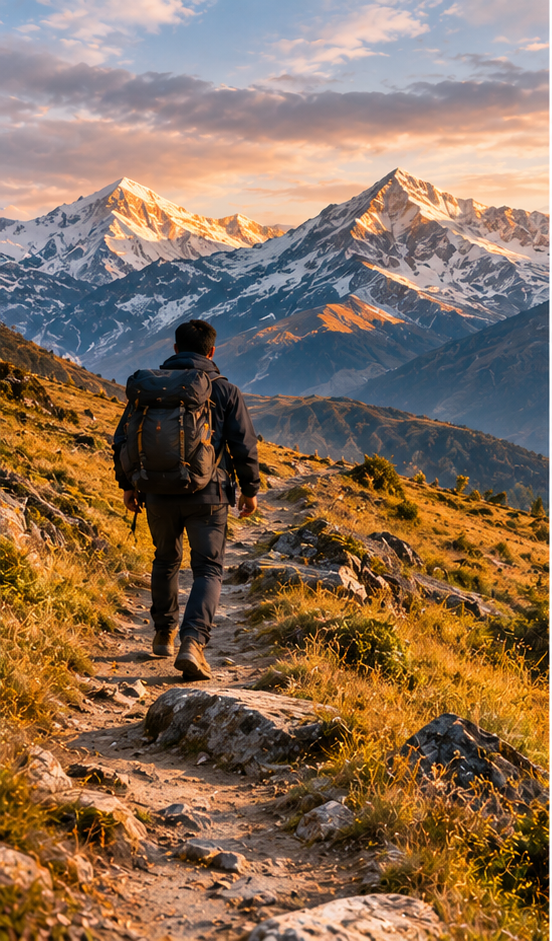
Popular trails earn their reputation for good reasons. They may lead to dramatic viewpoints, pass remarkable landscapes or offer a route that has become part of a region’s identity. Yet a destination is rarely defined by its most photographed path alone. Beyond the familiar routes, there are quieter trails where the landscape unfolds without a crowd, where the sound of footsteps is easier to hear and where a traveller can spend time observing rather than trying to keep pace with everyone else. These lesser-known paths often offer a different kind of reward, one that comes not from reaching a famous point but from being fully involved in the journey.
The appeal of a quieter trail begins with the freedom to notice small details. On a busy route, attention can become fixed on overtaking other walkers, finding space for photographs or reaching the next marked stop. On a less travelled path, the pace often changes naturally. A person may notice the pattern of light moving across a hillside, the scent of pine after rain, or the way a stream follows the slope before disappearing beneath stones. Such details are easy to overlook when the mind is occupied with a timetable. They create a more personal memory of the place because the traveller has experienced it rather than simply passed through it.
Quieter routes can also encourage a more thoughtful relationship with effort. A hike is not always about distance, elevation or speed. Some trails are gentle but visually rich, while others require patience and careful movement. The satisfaction comes from matching the pace to the terrain and recognising when a pause is more useful than another push forward. A traveller who learns to read the path, conserve energy and appreciate gradual progress may return with a stronger sense of connection than someone who treats every walk as a performance.
Choosing a lesser-known trail, however, should never mean choosing a route without preparation. Remote paths may have limited signage, unreliable phone coverage or fewer people nearby if something goes wrong. Responsible planning includes checking recent local information, understanding the route and its difficulty, carrying enough water and food, dressing for changing weather and telling someone about the intended plan. A map and offline navigation can be valuable, but they do not replace sound judgement. If local guides or authorities advise against a route, their knowledge should take priority over the attraction of an unexplored line on a map.
Local knowledge is often the difference between a rewarding detour and an avoidable problem. Residents may know whether a path has been damaged by rain, whether a stream is difficult to cross in a particular season or whether access passes through private or protected land. Asking respectfully can also reveal routes that are meaningful to the community but absent from popular travel lists. The traveller should remember that a quiet path is not automatically an attraction waiting to be discovered. It may be part of someone’s daily life, grazing land or a fragile natural area. Permission, local customs and environmental rules deserve careful attention.
Moving away from the busiest route can change the experience of companionship as well. A small group walking together on a quiet path often finds a more natural rhythm. Conversation comes and goes without the pressure of constant activity. There may be long stretches of silence, not because anyone has run out of things to say, but because the surroundings are enough. The shared effort of walking, choosing a place to rest and adjusting to the weather can create a bond that feels different from the social energy of a crowded attraction. Even a solo traveller may feel accompanied by the landscape in a way that is difficult to explain.
One of the strongest lessons of a quieter trail is that discovery does not require novelty at every turn. A familiar tree, an ordinary village edge or a bend in the path can become memorable when the traveller gives it attention. The mind often expects an experience to be extraordinary before it considers it worthwhile. A slower walk challenges that expectation. It shows that meaning can emerge from repetition, patience and careful observation. The path does not need to offer a dramatic reveal every few minutes. Its value can lie in the steady unfolding of the surroundings.
Quieter trails also ask visitors to leave a lighter footprint. Carrying waste back, staying on established paths, avoiding loud music and not disturbing wildlife are simple habits that help preserve the very qualities that make these places special. Picking flowers, carving names into trees or treating remote viewpoints as private photo sets can damage an environment that may take years to recover. A responsible visitor leaves the place as undisturbed as possible. The best evidence of a meaningful walk is not the mark left on the landscape, but the understanding carried home.
There is no need to reject popular destinations to appreciate quieter alternatives. Famous routes can be beautiful and worth experiencing, especially when approached with realistic expectations and respect for other visitors. The more useful shift is to stop measuring every journey by how recognisable its destination is. A traveller can choose one well-known viewpoint and then spend another day following a modest local path, provided it is safe and appropriate. This balance creates room for both shared landmarks and personal discovery.
When the walk finally ends, the most vivid memory may not be a summit or a photograph. It may be the silence before sunrise, a conversation with a local guide, the sound of wind moving through tall grass or the moment a difficult stretch gave way to an open valley. Lesser-known trails remind travellers that exploration is not a competition to reach the most famous place. It is an opportunity to pay attention, move with care and allow a landscape to become familiar one step at a time. Sometimes the road less travelled feels rewarding because it gives the traveller something increasingly rare: the space to experience a place without rushing to describe it.

