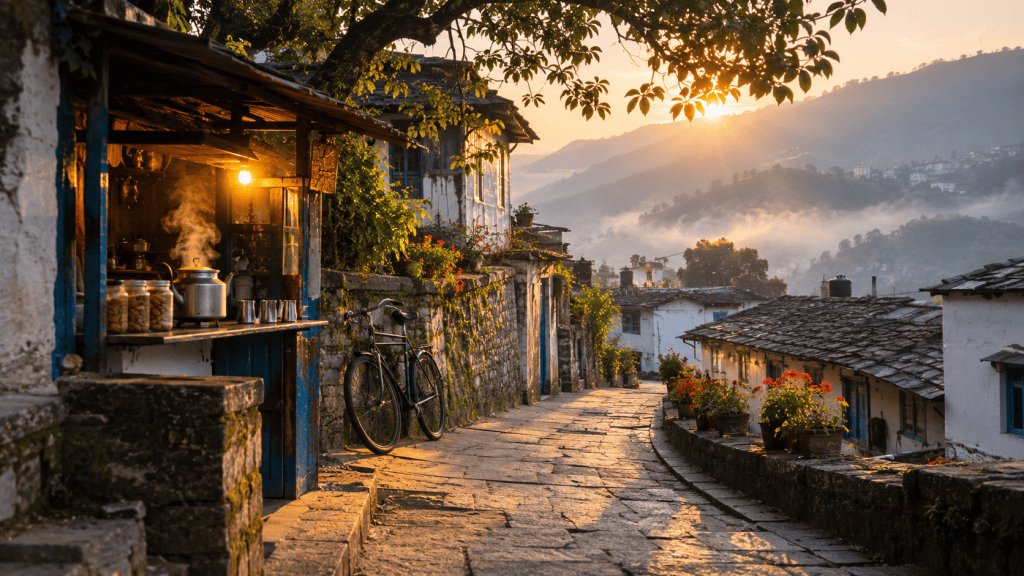
Most destinations are introduced to visitors through their busiest hours. Photographs show crowded markets, lively squares, popular viewpoints and restaurants filled with conversation. Those scenes have their own energy, but they are only one part of a place. Before the first buses arrive and shop shutters rise, a quieter version of the same destination begins to appear. The streets belong briefly to the people who live there, and the landscape seems to take a longer breath. For a traveller willing to wake early, those first hours can offer an unusually intimate introduction.
At dawn, a village or small town moves according to a rhythm that is easy to miss later in the day. A baker may be preparing the first batch of bread, a caretaker may be sweeping yesterday’s leaves from a courtyard, and a shopkeeper may be arranging vegetables while the kettle warms. These are ordinary tasks, repeated so often that the people doing them may not consider them remarkable. Yet they reveal how a community begins its day. The traveller becomes less of a spectator and more of a quiet observer of life as it actually unfolds.
The light itself changes the way familiar surroundings are perceived. A narrow lane that appears ordinary under the strong afternoon sun can become beautiful when the first warm rays reach its stone walls. Mist may remain suspended above rooftops, distant hills can emerge gradually from the darkness, and the sound of a stream may carry farther when traffic is absent. Even buildings that seem unremarkable in a guidebook can acquire character when seen without the distraction of crowds. The early morning does not necessarily create a new destination; it allows details that were already there to become visible.
Such walks also encourage a different relationship with time. A tightly planned itinerary often turns travel into a sequence of appointments. The next attraction, meal or transfer is always waiting, and every delay feels like something lost. An early walk without a demanding checklist creates a small pocket of freedom. The traveller can pause beside a doorway, watch the sky change colour or follow a lane simply because it looks inviting. The value lies not in covering distance but in noticing what would otherwise pass unseen.
Respect remains essential during these quiet hours. A residential lane is not an empty stage prepared for photographs; it is somebody’s home. A thoughtful visitor keeps noise low, avoids pointing a camera into private spaces and does not block doorways or narrow paths. If a person is beginning work, the traveller can offer a greeting without expecting a conversation. Permission should be sought before taking identifiable photographs, and local customs deserve the same care at dawn as at any other time. Quiet exploration is meaningful only when it does not disturb the people whose everyday life gives the place its character.
Early starts are not always comfortable. Cold air, unfamiliar streets and the temptation to remain under a warm blanket can make the first step difficult. Preparation makes the experience easier: checking sunrise time, choosing a safe route, carrying a light layer and keeping essential directions available can remove unnecessary uncertainty. In remote areas, travellers should follow local advice about access, weather and safety rather than wandering into unknown terrain. The aim is not to prove endurance. It is simply to make room for a different kind of experience.
One of the unexpected rewards of an early walk is the way it changes later encounters. A person who has already spent time noticing a place may approach its busy market with more patience. The familiar shopfronts and public spaces now have context. A conversation with a vendor may feel less like a transaction because the traveller has already seen the morning preparations that brought the market to life. Even a simple breakfast can become more memorable when it follows an hour spent observing the world wake up.
The experience can also challenge the assumption that travel must always be spectacular. Not every memorable moment needs a dramatic summit, an expensive activity or a photograph that attracts attention. Sometimes the lasting memory is a quiet lane, the smell of fresh bread or the first sunlight touching a distant ridge. These moments are difficult to schedule and almost impossible to reproduce exactly. Their value comes from being present when they happen, rather than from collecting them as proof of having visited somewhere.
On a future trip, a traveller might reserve just one morning for this slower approach. There is no need to turn every day into an early start or to abandon the attractions that made the destination appealing. A single unhurried walk can provide a useful balance. It offers a chance to observe before consuming, to listen before forming an impression and to understand that a place is more than the landmarks arranged for visitors.
By the time the streets become busy, the traveller may have returned to the room, found breakfast or continued towards the day’s plans. The town will look much as it did the previous afternoon, but the relationship with it may have changed. Its quiet routines, small details and gentle beginnings will have become part of the journey. The best discoveries are not always hidden far away. Sometimes they are waiting in plain sight, in the hours when the world has not yet started performing for an audience.

