
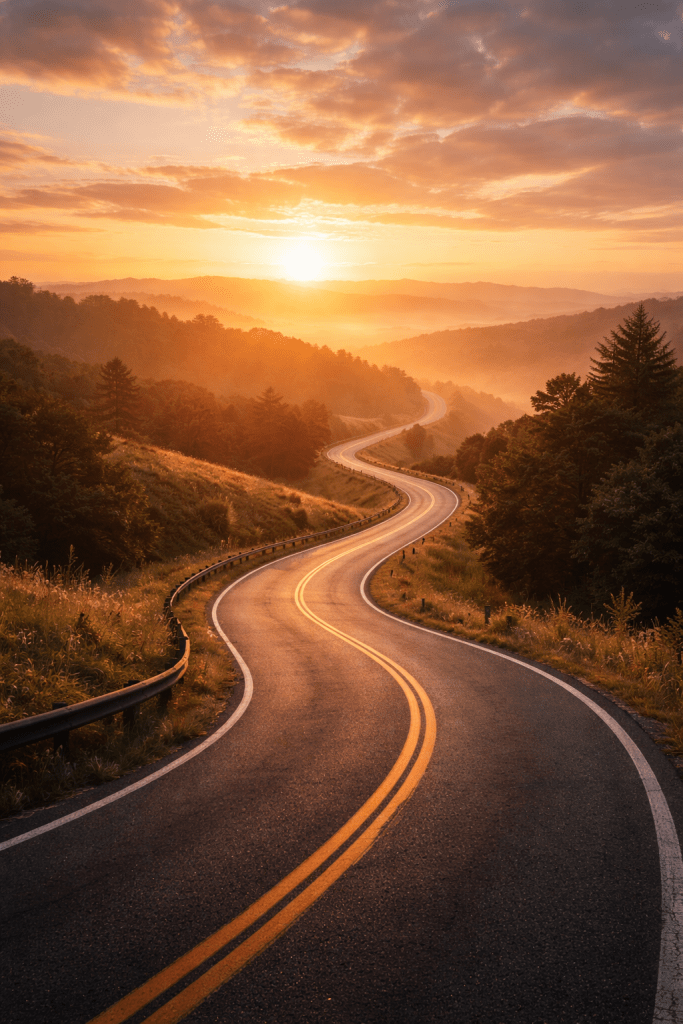
People often talk about goals as if they are finish lines. As if everything meaningful begins only after something is achieved. A promotion, a milestone, a number, a place—something out there waiting to validate the effort. And while destinations do matter, what many overlook is something far more powerful: the journey that leads to them.
He once believed that happiness would arrive the moment he “made it.” That life would somehow settle, become clearer, more complete. So he rushed. He measured his days by progress, by output, by how close he felt to the destination. But somewhere along the way, he noticed something strange. Even when he moved forward, even when things improved, the feeling he was chasing didn’t stay. It passed. Quickly.
That’s when it started to make sense—the destination wasn’t the whole story. It never was.
The journey shapes everything.
It’s easy to underestimate the value of the process because it doesn’t always feel exciting. It’s repetitive. Sometimes uncertain. Often uncomfortable. It doesn’t come with applause or immediate reward. But it’s where growth happens. It’s where identity is built. It’s where discipline, patience, resilience, and self-awareness are formed.
Anyone can admire a result. Few understand what it took to get there.
She learned this slowly. At first, she was focused only on outcomes. She wanted clarity, success, recognition. She compared her timeline with others, constantly feeling behind. But as time passed, she began to notice that the moments that changed her weren’t the big wins—they were the quiet, in-between phases.
The early mornings when motivation wasn’t there, but she showed up anyway.
The failures that forced her to reflect.
The small improvements that no one noticed.
The conversations that shifted her perspective.
Those were the moments that shaped her. Not the destination itself.
The journey teaches things the destination never can.
Reaching a goal might give you a sense of achievement, but the journey gives you the ability to sustain it. It teaches you how to handle pressure, how to adapt, how to keep going when things don’t work out. Without that, even the most impressive destination can feel empty or temporary.
There’s also a deeper truth people don’t often talk about—destinations are temporary, but journeys are ongoing. You reach one goal, and soon another appears. You arrive somewhere, and eventually, you move again. If your happiness depends only on reaching the next point, you’ll always feel like something is missing.
But when you learn to value the journey, everything changes.
You stop rushing through your life.
You start paying attention.
You begin to appreciate the process instead of just enduring it.
He realized this during a phase when nothing seemed to be moving forward. No visible progress. No big wins. Just effort. At first, it felt frustrating. Like time was being wasted. But over time, he noticed that he was becoming more patient, more focused, more aware of his habits.
He was changing—even if his circumstances weren’t immediately reflecting it.
And that’s the quiet power of the journey. It works on you before it works for you.
The journey also builds perspective. It shows you that setbacks aren’t the end, but part of the path. That mistakes aren’t failures, but lessons. That growth isn’t always visible, but it’s always happening.
When people only focus on the destination, they tend to resist these moments. They see obstacles as interruptions. But when you value the journey, you start to see obstacles as part of the experience. Something to learn from, not something to avoid.
She began to shift her mindset. Instead of asking, “How long until I get there?” she started asking, “What is this phase teaching me?” That small change made a big difference. It removed pressure. It replaced frustration with curiosity.
And suddenly, the journey didn’t feel like something to get through. It felt like something to experience.
There’s also something grounding about being present in the journey. When you’re always focused on the destination, you’re constantly living in the future. You miss what’s happening now. You overlook moments that, later on, you’ll wish you had paid more attention to.
The journey is where memories are made. The late nights. The early starts. The conversations. The struggles. The breakthroughs that seem small at the time but become meaningful later.
The destination might be a point. The journey is the story.
And stories matter.
They give depth to success. They give meaning to effort. They make outcomes feel earned, not just achieved.
Another thing the journey teaches is self-trust. When you go through challenges and keep moving, you begin to trust your ability to handle what comes next. That trust is more valuable than any external validation. Because it stays with you, regardless of where you are.
Destinations can be taken away. Circumstances can change. But the growth you gain through the journey becomes part of who you are.
That’s something no outcome can replace.
There’s also a certain freedom in accepting that the journey matters. You stop comparing your pace with others. You stop feeling like you’re behind. You understand that everyone’s path looks different, and that’s okay.
Your journey doesn’t need to be fast to be meaningful.
It just needs to be real.
At the end of the day, the destination is a moment. The journey is a lifetime of moments. And when you look back, it’s rarely the destination you remember most clearly—it’s the path you took to get there.
The challenges you overcame.
The person you became.
The lessons you learned.
That’s what stays.
So instead of rushing through your life trying to reach the next point, pause. Look around. Pay attention to where you are. Because this—right now—is part of your journey.
And it matters more than you think.
Because in the end, the journey isn’t just important.
It’s everything.


Leave a comment